Your Topics | Multiple Stories for Creators
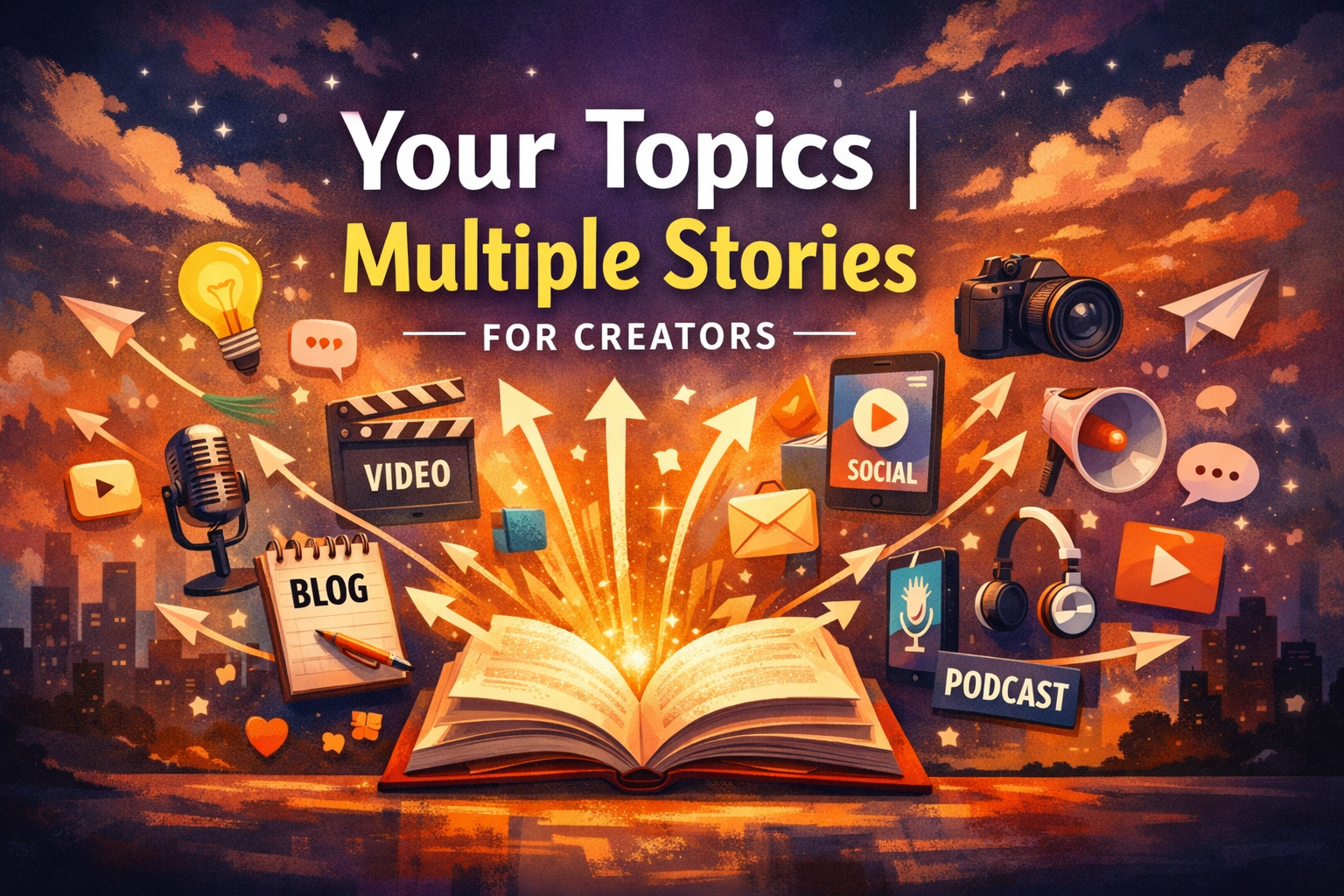
In today’s digital world, creators are no longer limited to one voice, one niche, or one format. Whether you’re a blogger, YouTuber, podcaster, novelist, or social media influencer, your power lies in one simple truth: your topics can create multiple stories.
The most successful creators understand that a single idea can branch into countless narratives, platforms, and perspectives. Instead of chasing endless new ideas, they learn how to expand one core theme into layered content.
Let’s explore how you can turn your topics into multiple stories and build a sustainable, creative ecosystem around your work.
The Power of One Core Topic
Many creators struggle with burnout because they believe they must constantly invent new ideas. But creativity isn’t about endless invention it’s about expansion.
Take a look at some well-known creators:
- Marie Forleo built her brand around business and personal growth yet she’s created books, interviews, courses, and videos from that core focus.
- Ali Abdaal focuses on productivity and learning, but his content branches into lifestyle, book reviews, tech tools, and entrepreneurship.
- Brené Brown centers on vulnerability and courage, yet her work spans books, documentaries, talks, and podcasts.
Their success didn’t come from random topics it came from depth within a central theme.
What Does “Multiple Stories” Really Mean?
Multiple stories don’t mean repeating yourself. It means:
- Exploring different angles of the same subject
- Telling personal stories, case studies, and expert insights
- Turning one topic into various content formats
- Creating beginner, intermediate, and advanced perspectives
- Sharing wins, failures, and behind-the-scenes lessons
If your topic is “fitness,” your stories could include:
- Your personal transformation journey
- A client success story
- Science-backed advice
- Mistakes beginners make
- Day-in-the-life routines
- Mental health and exercise
Same topic. Different stories.
Why Creators Need Multiple Story Angles
1. Audience Growth
Different stories attract different people. One person connects to emotional storytelling. Another prefers step-by-step tutorials.
When you diversify storytelling within your topic, you expand your reach without abandoning your niche.
2. Authority Building
Exploring a topic deeply positions you as an expert. Instead of surface-level content, your audience sees range and insight.
3. Content Longevity
Evergreen topics can produce years of content when broken into layers.
4. Creative Sustainability
Working within a focused topic reduces overwhelm and helps you build mastery.
How to Turn One Topic into Many Stories
Here’s a practical framework creators can use.
Step 1: Define Your Core Theme
Ask yourself:
- What do I want to be known for?
- What problem do I solve?
- What conversations energize me?
Examples of strong core themes:
- Financial freedom
- Mental health awareness
- Creative entrepreneurship
- Digital marketing
- Personal development
- Minimalist living
Clarity creates momentum.
Step 2: Break It Into Subtopics
Every major topic contains smaller conversations.
For example, if your theme is “personal branding,” your subtopics could include:
- Social media presence
- Visual identity
- Storytelling techniques
- Networking strategies
- Online reputation management
- Confidence building
Each subtopic becomes a story engine.
Step 3: Apply Story Angles
Use these story angles to multiply your content:
- Personal Experience
- Educational Guide
- Case Study
- Myth Busting
- Beginner’s Guide
- Advanced Strategy
- Mistakes to Avoid
- Trend Analysis
- Behind the Scenes
- Future Predictions
Let’s say your topic is productivity (like Ali Abdaal):
You could create:
- “How I Study 4 Hours a Day”
- “5 Productivity Myths That Waste Your Time”
- “Beginner’s Guide to Time Blocking”
- “Advanced Deep Work Systems”
- “A Week Using Only Analog Tools”
- “What Burnout Taught Me About Focus”
One theme. Endless expansion.
Using Platforms to Multiply Stories
Your topic doesn’t need to live on just one platform.
Consider how creators repurpose content:
- A blog post becomes a YouTube script
- A YouTube video becomes Instagram reels
- A podcast becomes a Twitter thread
- A long article becomes an email newsletter
- A series becomes an ebook
Think about how Gary Vaynerchuk distributes content one keynote speech can become dozens of micro-content pieces across platforms.
You don’t need more ideas. You need more extraction from existing ideas.
Emotional Storytelling: The Hidden Advantage
Facts teach. Stories connect.
If you want your topic to resonate deeply:
- Share failures, not just successes
- Admit doubts and pivots
- Tell origin stories
- Include turning points
For example, Brené Brown built global impact by weaving research with personal vulnerability.
People remember stories more than statistics.
Creating Story Series for Long-Term Engagement
Instead of isolated posts, build series:
- “30 Days of Productivity”
- “Weekly Creator Lessons”
- “My Startup Diary”
- “From Zero to 10K Followers”
- “Fitness Journey Year One”
Series create anticipation and loyalty.
Audiences return because they feel part of an unfolding narrative.
Avoiding the Common Creator Trap
Many creators make one critical mistake: chasing trends unrelated to their core topic.
While trend-based content can bring temporary traffic, it weakens brand clarity.
Before creating content, ask:
- Does this align with my long-term topic?
- Will this attract the right audience?
- Does this move my authority forward?
If not, reconsider.
Focus builds power.
Building a Story Bank
Professional creators maintain a “story bank.”
This includes:
- Personal experiences
- Lessons learned
- Customer questions
- Common mistakes
- Industry insights
- Past journal entries
- Quotes and reflections
Whenever inspiration strikes, capture it. Over time, you’ll have dozens of future stories waiting to be developed.
From Content Creator to Thought Leader
When you consistently explore your topic from multiple dimensions, something powerful happens:
You stop being “someone who posts content” and become someone shaping conversations.
That’s how creators evolve into thought leaders.
Consider how Seth Godin built a career around marketing philosophy not by chasing every new trend, but by deepening one core conversation over decades.
Depth creates distinction.
Practical Example: Turning One Topic Into 20 Stories
Let’s say your topic is “Freelancing.”
Here’s how you could expand it:
- How I Landed My First Client
- Mistakes I Made as a Beginner
- Pricing Strategies That Work
- How to Handle Difficult Clients
- Daily Routine of a Freelancer
- Burnout and Recovery
- Tools I Use
- Cold Pitch Templates
- Contract Essentials
- Taxes for Freelancers
- My First $10K Month
- Freelancing vs Full-Time Job
- Working While Traveling
- Productivity Systems
- Scaling to an Agency
- Niching Down
- Building a Personal Brand
- Client Red Flags
- Negotiation Techniques
- Future of Freelancing
That’s months of content from one focus.
The Creator Mindset Shift
Instead of asking: “What should I post today?”
Start asking: “How can I explore my topic more deeply?”
This shift transforms your content strategy from reactive to intentional.
You’re not chasing content.
You’re building a body of work.
Final Thoughts: Own Your Topics
Your topics are your creative foundation.
When you:
- Clarify your theme
- Develop subtopics
- Apply multiple story angles
- Repurpose across platforms
- Share authentic experiences
You create an ecosystem of content that compounds over time.
Creators who master this don’t run out of ideas.
They run deeper into them.
Instead of searching for new topics, commit to mastering the ones that truly matter to you.
Because the most powerful brands, movements, and creative careers weren’t built on scattered ideas they were built on multiple stories rooted in one clear voice.




Post Comment