5StarsStocks.com: Ultimate Guide to Smart Investing for Beginners

Introduction
In today’s fast-moving financial world, access to reliable investment information can mean the difference between steady wealth creation and costly mistakes. With markets evolving rapidly and new investors entering daily, platforms like 5starsstocks.com are positioned as valuable resources for individuals seeking structured guidance, analysis, and strategic insights.
This comprehensive guide explores everything investors need to know about 5starsstocks.com from its potential features and benefits to how it may support beginners in building strong portfolios. Whether you are just starting your investment journey or looking to sharpen your strategy, this in-depth article will provide clarity, structure, and actionable knowledge.
Understanding the Modern Investment Landscape
Before diving into 5starsstocks.com specifically, it is important to understand the broader investment environment.
The Rise of Self-Directed Investing
Over the past decade, investing has shifted dramatically. Traditional brokerage models have given way to:
- Online trading platforms
- Mobile investment apps
- AI-powered analysis tools
- Retail investor communities
Investors now demand faster data, deeper analytics, and simplified decision-making tools.
Why Research Matters More Than Ever
Information overload is one of the biggest challenges in investing. Social media tips, influencer advice, and trending stock hype can create confusion. A structured platform like 5starsstocks.com can help filter noise and provide:
- Organized stock evaluations
- Performance tracking
- Market insights
- Risk assessment strategies
What Is 5starsstocks.com?

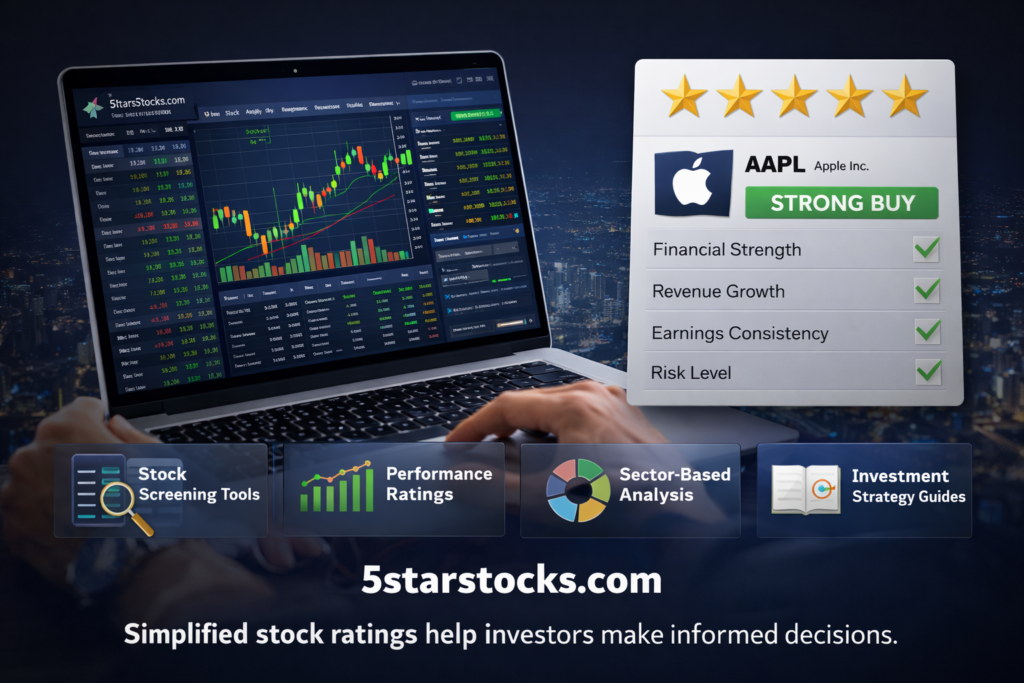
5starsstocks.com appears to be positioned as an investment-focused website offering stock analysis, ratings, educational content, and market insights.
While individual features may vary, platforms of this type typically focus on:
- Stock screening tools
- Performance ratings
- Sector-based analysis
- Beginner education
- Investment strategy guides
The name itself suggests a rating system—possibly ranking stocks based on performance metrics, risk indicators, or growth potential.
Core Features Investors Should Expect

1. Stock Rating System
A “5-star” rating implies a structured evaluation model. These ratings are usually based on:
- Financial strength
- Revenue growth
- Earnings consistency
- Market position
- Risk level
Such a system simplifies decision-making for beginners who may not yet understand balance sheets or technical indicators.
2. Market Analysis
Strong investment platforms provide regular updates on:
- Market trends
- Sector performance
- Economic shifts
- Interest rate impacts
- Global market influences
This macro perspective helps investors align their portfolios with broader economic cycles.
3. Educational Content
For beginners, education is critical. High-quality content may include:
- Investing basics
- Risk management principles
- Portfolio diversification guides
- Long-term vs short-term strategy discussions
- Dividend investing tutorials
Educational material transforms passive readers into informed investors.
4. Portfolio Strategy Insights
Many investors struggle with allocation decisions. A good resource may offer insights such as:
- Growth vs value stock balance
- Dividend allocation models
- Sector diversification
- Defensive vs aggressive portfolio construction
Why Beginners Need Structured Platforms
Emotional Decision-Making
One of the biggest threats to new investors is emotional trading:
- Panic selling during downturns
- FOMO buying during rallies
- Overconcentration in trending stocks
Structured analysis platforms reduce emotional bias by focusing on data-driven evaluation.
Information Filtering
Without guidance, beginners face:
- Conflicting opinions
- Social media hype
- Complex financial jargon
5starsstocks.com potentially bridges this gap by presenting simplified, organized insights.
The Importance of Stock Ratings
Stock ratings serve as shortcuts for evaluation, especially for new investors.
How Ratings Are Typically Calculated
Common factors include:
- Earnings growth rate
- Price-to-earnings ratio
- Debt-to-equity ratio
- Return on equity
- Free cash flow
A five-star system often indicates strong fundamentals, while lower ratings may suggest caution.
Benefits of Rating Systems
- Saves research time
- Standardizes comparison
- Reduces analysis complexity
- Encourages disciplined investing
Building a Strong Investment Foundation
Even with access to platforms like 5starsstocks.com, investors must understand core principles.
1. Diversification
Never rely on a single stock or sector. Diversification spreads risk across:
- Technology
- Healthcare
- Energy
- Consumer goods
- Financial services
2. Long-Term Perspective
Markets fluctuate daily, but long-term growth historically trends upward. Patience is critical.
3. Risk Management
Invest only what you can afford to leave invested. Risk tolerance varies based on:
- Age
- Income stability
- Financial goals
- Time horizon
Growth Investing vs Value Investing
A strong educational platform should explain different investing styles.
Growth Investing
Focuses on companies expected to grow faster than the market. These stocks may have:
- Higher valuations
- Strong revenue expansion
- Innovation-driven business models
Value Investing
Targets undervalued companies trading below intrinsic value due to temporary setbacks.
Balanced Approach
Many investors combine both strategies for stability and growth.
Dividend Investing Strategy
Dividend stocks provide regular income and are popular among conservative investors.
Key considerations:
- Dividend yield
- Payout ratio
- Dividend growth history
- Company cash flow strength
Reliable platforms may highlight dividend sustainability metrics.
Risk Factors Every Investor Should Consider
Even highly rated stocks carry risks.
Market Risk
Broad economic downturns affect nearly all equities.
Sector Risk
Industry-specific challenges can impact entire sectors.
Company-Specific Risk
Leadership changes, scandals, or poor earnings can reduce stock value.
Liquidity Risk
Less-traded stocks may be harder to sell quickly.
Understanding these risks improves decision-making.
Technical Analysis vs Fundamental Analysis
Investment platforms often combine both approaches.
Fundamental Analysis
Focuses on company performance:
- Revenue
- Earnings
- Debt
- Competitive advantage
Technical Analysis
Examines price patterns, trends, and trading volume.
Beginners should prioritize fundamentals while gradually learning technical indicators.
Portfolio Construction Example
A beginner portfolio might include:
- 40% large-cap growth stocks
- 25% dividend stocks
- 20% ETFs
- 10% emerging market exposure
- 5% cash reserve
Allocation depends on risk tolerance and goals.
The Role of Economic Indicators
Market performance is influenced by:
- Inflation rates
- Interest rates
- Employment data
- GDP growth
- Central bank policies
Educational content should help investors interpret these indicators.
Long-Term Wealth Creation Principles
True wealth creation is built on:
- Consistency
- Patience
- Reinvestment
- Compounding
Compounding allows earnings to generate additional earnings over time.
Avoiding Common Beginner Mistakes
- Chasing hype stocks
- Ignoring diversification
- Trading too frequently
- Panic selling
- Overleveraging
Disciplined research reduces these errors.
The Psychology of Investing
Successful investing requires emotional discipline.
Key psychological principles:
- Avoid herd mentality
- Stick to long-term plans
- Accept short-term volatility
- Base decisions on data, not fear
Platforms offering structured analysis help maintain rational thinking.
Sector Analysis Overview
Technology
High growth potential but often volatile.
Healthcare
Defensive and innovation-driven.
Energy
Cyclical and commodity-dependent.
Consumer Staples
Stable demand regardless of economic cycles.
Financials
Sensitive to interest rate changes.
A diversified portfolio balances exposure.
Understanding Market Cycles
Markets move in cycles:
- Expansion
- Peak
- Contraction
- Recovery
Recognizing these phases improves timing decisions.
Evaluating Company Financial Health
Key financial statements include:
- Income Statement
- Balance Sheet
- Cash Flow Statement
Important metrics:
- Net income growth
- Operating margin
- Debt levels
- Free cash flow
The Power of Compounding Returns
If an investor earns an average of 8% annually, investments can double roughly every nine years.
Reinvesting dividends accelerates compounding growth.
Setting Investment Goals
Clear goals guide strategy:
- Retirement planning
- Wealth accumulation
- Passive income generation
- Capital preservation
Goal clarity prevents impulsive decisions.
Technology and Modern Investing Tools
Digital platforms offer:
- Real-time data
- Automated analysis
- AI-based predictions
- Portfolio tracking dashboards
These tools increase accessibility for beginners.
Evaluating Risk Tolerance
Investors should assess:
- Comfort with volatility
- Financial stability
- Investment time frame
Higher risk tolerance allows greater exposure to growth stocks.
Short-Term vs Long-Term Trading
Short-term trading requires:
- Advanced analysis
- Active monitoring
- Higher risk tolerance
Long-term investing focuses on fundamentals and patience.
Beginners are generally better suited to long-term strategies.
Rebalancing a Portfolio
Over time, asset allocation shifts due to performance differences.
Rebalancing involves:
- Selling overweight assets
- Buying underweight assets
- Restoring original allocation targets
This maintains risk alignment.
The Importance of Continuous Learning
Markets evolve. Investors must:
- Stay informed
- Review strategies
- Adapt to economic shifts
Educational platforms play a critical role.
How 5starsstocks.com Can Support Beginners
Based on its name and positioning, 5starsstocks.com may provide:
- Simplified rating systems
- Organized stock research
- Educational guides
- Strategy discussions
- Risk insights
Such structure helps beginners build confidence.
Responsible Investing Practices
Ethical and sustainable investing is growing in importance.
Consider:
- Environmental responsibility
- Corporate governance
- Social impact
Responsible investing aligns profits with values.
Investment Discipline and Patience
Market volatility is inevitable. Discipline requires:
- Avoiding impulsive trades
- Staying invested during downturns
- Reviewing long-term strategy
Patience separates successful investors from unsuccessful ones.
Tax Considerations
Investors should understand:
- Capital gains tax
- Dividend taxation
- Tax-advantaged accounts
Tax efficiency increases net returns.
The Role of ETFs
Exchange-Traded Funds provide:
- Instant diversification
- Lower risk exposure
- Reduced individual stock dependency
ETFs are often suitable for beginners.
Income vs Growth Objectives
Some investors prioritize income stability. Others prioritize capital appreciation.
Understanding your objective shapes stock selection.
The Importance of Data Accuracy
Reliable data is essential for decision-making. Structured platforms help ensure consistency and clarity.
Market Volatility and Opportunity
Volatility creates fear but also opportunity. Strong companies may trade at discounts during downturns.
Prepared investors can benefit from market corrections.
Building Confidence as an Investor
Confidence comes from:
- Education
- Experience
- Research
- Disciplined strategy
Platforms that simplify complex data accelerate learning.
Final Thoughts
5StarsStocks.com represents the type of structured investment resource that modern beginners need. In a world filled with financial noise and emotional trading, clarity and organization are powerful advantages.
Successful investing is not about quick profits. It is about:
- Smart research
- Strategic allocation
- Long-term patience
- Emotional discipline
By combining foundational investing principles with structured research tools, beginners can move confidently toward financial independence.
The journey to wealth does not require perfection. It requires consistency, education, and commitment. With the right mindset and the right tools, long-term success becomes achievable.
Read More: 5starsstocks.com: A Complete Guide for Smart Stock Market Insights




Post Comment