Adenoid Hypertrophy: Diagnosis and Treatment Options
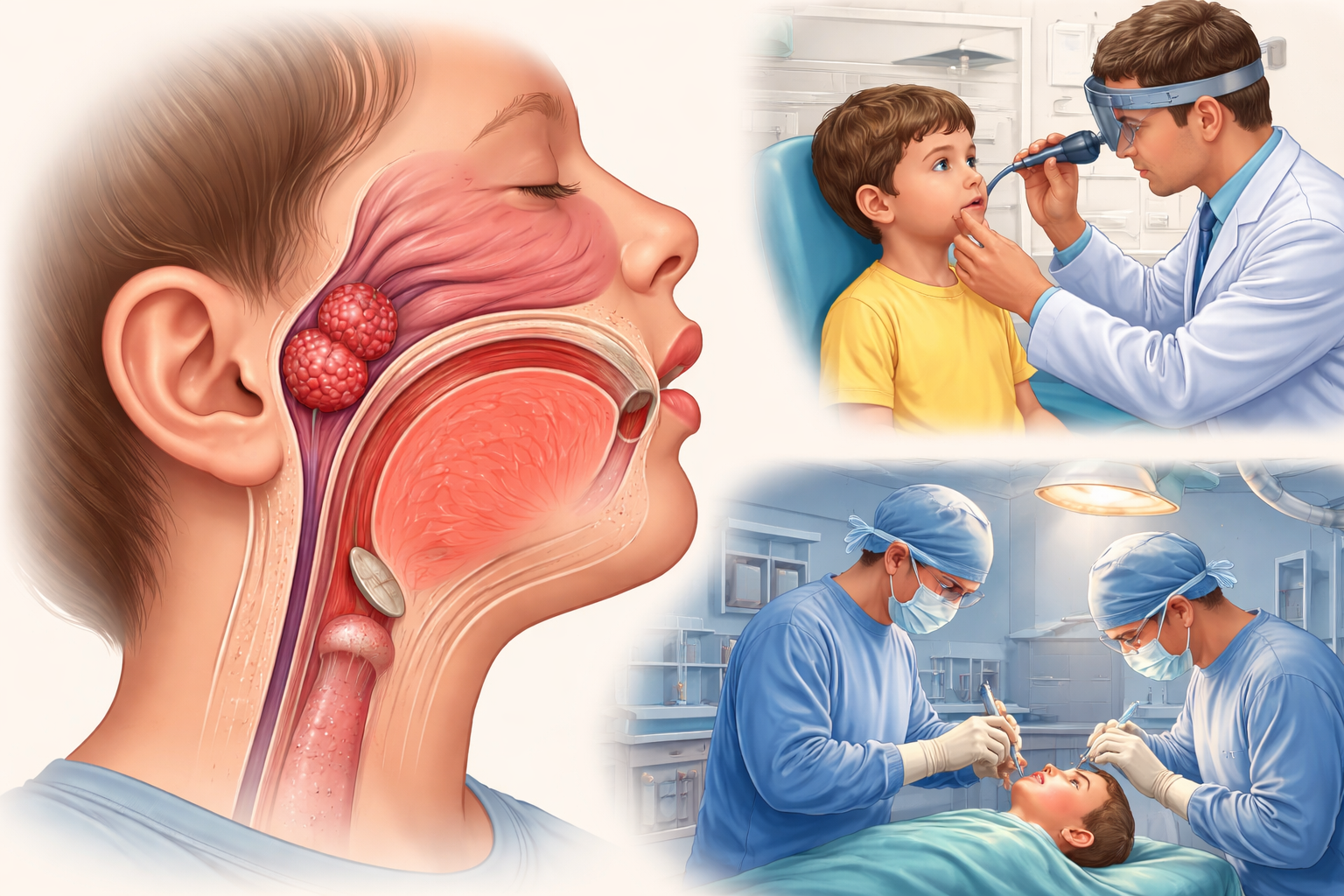
Adenoid hypertrophy refers to the abnormal enlargement of the adenoids small masses of lymphoid tissue located at the back of the nasal cavity, where the nose meets the throat. Adenoids play an important role in the immune system during early childhood by helping the body trap and fight germs. However, when they become enlarged, they can cause significant breathing and ear problems, especially in children.
Although adenoid hypertrophy is most common in young children, it can occasionally affect adolescents and adults. Understanding the causes, symptoms, diagnostic methods, and treatment options is essential for timely management and prevention of complications.
What Are Adenoids and Why Do They Enlarge?
Adenoids are part of the body’s first line of defense against infections. In early childhood, they actively help the immune system recognize bacteria and viruses. Normally, adenoids grow during early childhood and begin to shrink naturally after the age of 7–10 years.
However, adenoid hypertrophy occurs when the tissue becomes persistently enlarged. This enlargement is usually due to:
- Repeated upper respiratory infections
- Chronic allergies
- Environmental irritants (such as smoke or pollution)
- Genetic predisposition
- Chronic sinus infections
When adenoids swell, they can block the airway behind the nose and interfere with normal breathing and ear function.
Common Symptoms of Adenoid Hypertrophy
The symptoms of enlarged adenoids often develop gradually and may be mistaken for common colds or allergies. Parents and patients should watch for the following signs:
Nasal and Breathing Symptoms
- Persistent mouth breathing
- Chronic nasal blockage
- Noisy breathing
- Snoring during sleep
- Sleep apnea (pauses in breathing during sleep)
- Nasal-sounding speech
Ear-Related Symptoms
- Recurrent ear infections
- Hearing difficulty
- Fluid buildup in the middle ear
- Frequent ear pain
Facial and Sleep Changes
- Restless sleep
- Daytime sleepiness
- Long-term mouth breathing leading to “adenoid facies” (elongated face, open mouth posture)
- Poor concentration in children
If left untreated, chronic airway obstruction can affect a child’s growth, sleep quality, and school performance.
How Adenoid Hypertrophy Is Diagnosed
Accurate diagnosis is important because the symptoms can mimic other conditions such as allergic rhinitis, sinusitis, or tonsillar enlargement. Healthcare providers typically use a combination of clinical evaluation and imaging.
1. Medical History and Physical Examination
The doctor will ask about:
- Snoring or breathing problems
- Frequency of ear infections
- Sleep disturbances
- Mouth breathing habits
A basic throat and nasal exam is performed, although adenoids cannot be seen directly through the mouth.
2. Nasal Endoscopy
This is one of the most accurate diagnostic tools. A thin, flexible camera is gently inserted through the nose to visualize the adenoids directly.
Advantages:
- Quick and highly accurate
- Minimal discomfort
- Helps assess the degree of blockage
3. Lateral Neck X-ray
A lateral soft tissue neck X-ray can estimate the size of the adenoids and airway obstruction. It is often used when endoscopy is not available.
4. Hearing Tests
If ear problems are suspected, doctors may perform:
- Tympanometry
- Audiometry
- Middle ear fluid assessment
These tests help determine whether enlarged adenoids are affecting ear function.
Treatment Options for Adenoid Hypertrophy
Treatment depends on the severity of symptoms, age of the patient, and presence of complications. Management generally falls into two categories: medical treatment and surgical treatment.
Medical (Non-Surgical) Treatment
Mild to moderate cases are often managed conservatively first.
Common medical treatments include:
1. Nasal steroid sprays
These help reduce inflammation and may shrink mildly enlarged adenoids, especially when allergies are involved.
2. Antihistamines
Useful in children with allergic rhinitis contributing to adenoid swelling.
3. Antibiotics
Prescribed if there is an active bacterial infection.
4. Saline nasal irrigation
Helps clear nasal passages and reduce irritation.
Medical therapy is usually tried for several weeks to months. However, if symptoms persist or complications develop, surgery may be recommended.
Surgical Treatment: Adenoidectomy
An adenoidectomy is the surgical removal of the adenoids. It is one of the most common pediatric ENT procedures.
When Surgery Is Recommended
Doctors usually advise surgery if a child has:
- Severe nasal obstruction
- Obstructive sleep apnea
- Recurrent ear infections
- Persistent middle ear fluid
- Failure of medical treatment
- Speech or facial development problems
Procedure Overview
- Usually performed under general anesthesia
- Takes about 20–30 minutes
- No external cuts are made
- Often done as day-care surgery
Recovery
Most children:
- Go home the same day
- Return to normal activity within a few days
- Experience mild throat discomfort temporarily
Complications are rare but may include bleeding, infection, or recurrence (uncommon).
Possible Complications if Left Untreated
Ignoring significant adenoid hypertrophy can lead to:
- Chronic sleep apnea
- Poor growth and weight gain
- Recurrent ear infections
- Hearing loss
- Speech problems
- Facial growth abnormalities
- Behavioral and learning difficulties
Early evaluation by an ENT specialist helps prevent these outcomes.
Prevention and Home Care Tips
While not all cases are preventable, these steps may reduce risk:
- Treat allergies promptly
- Avoid exposure to cigarette smoke
- Maintain good nasal hygiene
- Ensure timely treatment of respiratory infections
- Keep vaccinations up to date
When to See a Doctor
Seek medical evaluation if a child has:
- Persistent mouth breathing
- Loud nightly snoring
- Pauses in breathing during sleep
- Frequent ear infections
- Hearing concerns
- Chronic nasal blockage
Early diagnosis leads to simpler treatment and better outcomes.
Final Thoughts
Adenoid hypertrophy is a common but manageable condition, particularly in children. While mild cases often respond well to medical therapy, persistent or severe enlargement may require adenoidectomy. With proper diagnosis and timely treatment, most patients experience excellent relief from symptoms and improved quality of life.




Post Comment