Braves Weigh Marcell Ozuna as Waiver Candidate
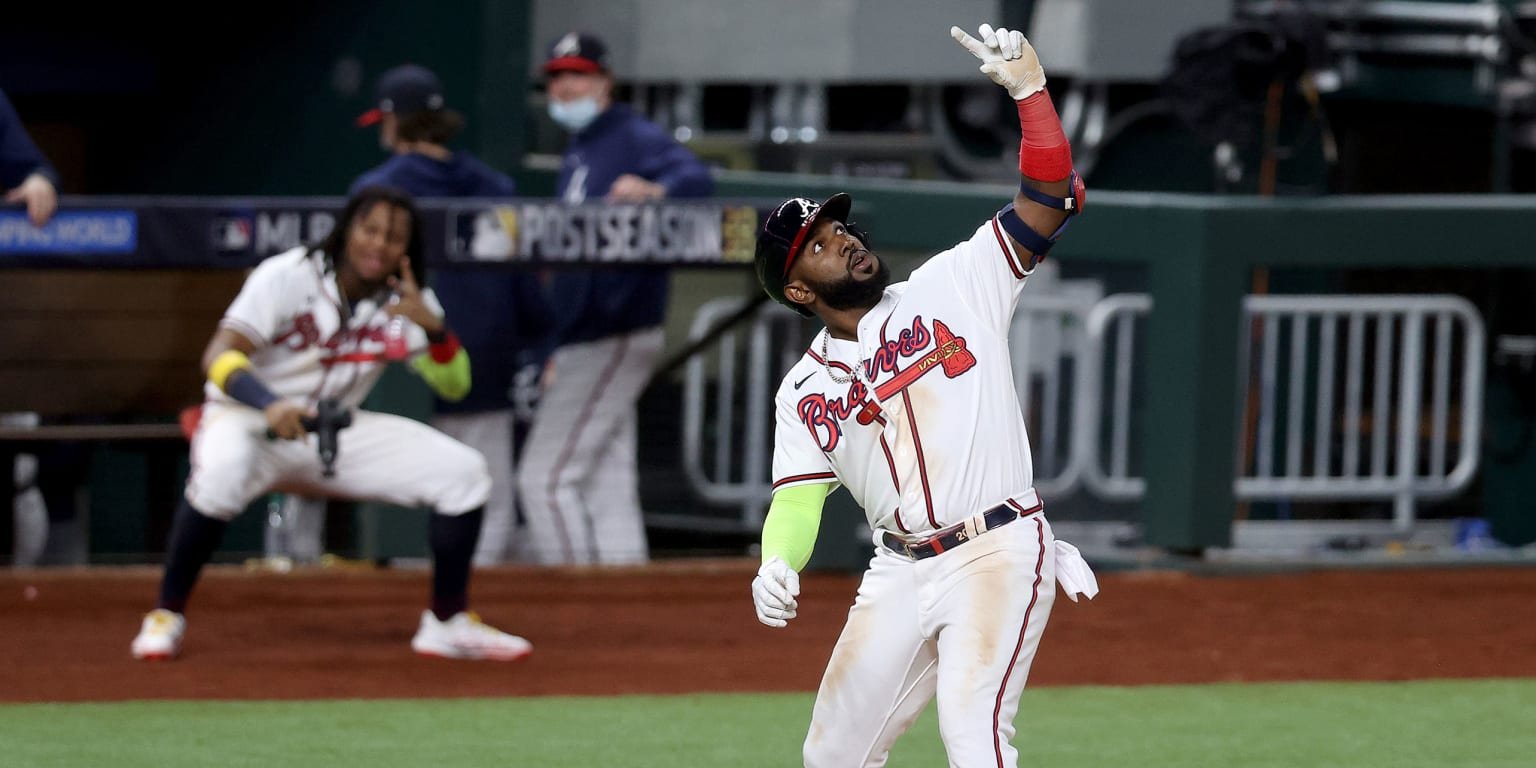
The idea of the Atlanta Braves placing Marcell Ozuna on waivers would have sounded unrealistic not long ago. Ozuna has been one of the club’s most dangerous power bats when locked in, a middle-of-the-order presence capable of changing a game with one swing. Yet baseball is rarely about reputation alone. It’s about timing, performance trends, roster flexibility, and long-term strategy.
So is Ozuna truly a waiver candidate, or is this conversation more noise than substance? To answer that properly, we need to examine performance, contract structure, roster dynamics, and the Braves’ competitive window.
Understanding What “Waiver Candidate” Really Means
Before jumping to conclusions, it’s important to clarify what being a waiver candidate implies. In Major League Baseball, placing a player on waivers can serve different purposes:
- Testing trade interest
- Attempting to clear salary
- Opening a 40-man roster spot
- Signaling a performance-related decision
It does not automatically mean the team is giving up on the player. Often, waivers are strategic rather than emotional.
For a contending team like Atlanta, any waiver move would likely be calculated, not reactionary.
Ozuna’s Offensive Value
Ozuna’s value begins and ends with his bat. At his best, he is:
- A 30+ home run threat
- A high-RBI producer
- A strong presence behind elite hitters
When he is driving the ball to all fields, Atlanta’s lineup becomes significantly deeper. Pitchers can’t pitch around the top of the order if Ozuna is looming.
However, Ozuna has also been known for streaky stretches. Extended slumps can raise eyebrows, particularly when he is serving primarily as a designated hitter. Unlike position players who add defensive value, a DH must consistently produce offensively to justify everyday playing time.
If the power dips and on-base percentage slides, the margin for error narrows quickly.
Defensive Limitations and Roster Flexibility
Ozuna’s defensive metrics have been a concern in previous seasons. While he can play the outfield, he is no longer viewed as a reliable everyday defender. That makes him far more valuable as a designated hitter.
But here’s the catch: roster flexibility matters, especially for contenders.
The Braves typically value versatility. Players who can move around the diamond allow manager Brian Snitker to mix and match lineups, manage injuries, and optimize matchups. A full-time DH limits that flexibility.
If Atlanta’s younger players begin demanding at-bats, the front office may need to reassess how many roster spots are tied to one-dimensional roles.
Contract Considerations
One of the biggest factors in this conversation is money.
Ozuna signed a multi-year contract worth significant guaranteed dollars. Releasing or placing a high-salary veteran on waivers does not erase financial obligations. If he clears waivers and is released, the Braves would still be responsible for most of his remaining salary, minus the prorated league minimum if another team signs him.
That financial reality makes a waiver decision far more complex. Teams do not casually absorb dead money, especially when they are built to compete for a championship.
For Atlanta to seriously consider waivers, they would need to believe:
- The roster spot is more valuable than the salary commitment
- The performance decline is unlikely to reverse
- The move improves postseason odds
That is a high bar.
The Braves’ Competitive Window
The Braves are not rebuilding. They are built to win now.
With a core of All-Star talent locked into long-term deals, Atlanta’s championship window remains open. That context changes everything. Contenders typically prioritize stability over drastic mid-season moves.
Unless Ozuna’s performance collapses to a point where he actively harms the lineup, the Braves are more likely to adjust his role rather than remove him entirely.
In other words, a reduced role is more realistic than a waiver placement.
Performance Trends Matter More Than Headlines
Baseball is a game of adjustments. Slumps happen. Power hitters especially go through stretches where timing disappears and strikeouts climb.
The critical question is sustainability. Is the downturn mechanical? Is it injury-related? Or is it simply variance?
If advanced metrics such as hard-hit rate, barrel percentage, and exit velocity remain strong, the front office may view the slump as temporary. But if those indicators decline sharply, concern grows.
Executives rely heavily on these underlying metrics when making roster decisions. Surface stats alone rarely tell the full story.
Younger Talent and Internal Pressure
Another factor in waiver discussions is internal competition.
If younger players in the organization begin producing at a high level, pressure builds to create opportunities. Prospects on the 40-man roster need at-bats to develop. Veterans with declining production can find themselves squeezed.
However, replacing a proven power hitter with an untested option carries risk. Championship contenders are often reluctant to gamble unless the upside is obvious.
The Braves must weigh potential long-term growth against short-term playoff stability.
Clubhouse Presence and Intangibles
Baseball decisions are not made solely on spreadsheets.
Veteran players contribute leadership, experience, and clubhouse stability. Ozuna has postseason experience and understands high-pressure environments. That intangible value matters during playoff pushes.
Removing a veteran mid-season can disrupt chemistry. Front offices consider these factors carefully, particularly when expectations are championship-level.
Realistic Scenarios That Could Lead to Waivers
While a waiver move appears unlikely right now, it is not impossible. Here are realistic triggers:
1. Extended Offensive Collapse
If production drops for multiple months and advanced metrics confirm decline, the team may reassess.
2. Major Injury Concerns
If physical limitations reduce his effectiveness, financial considerations shift.
3. Trade Deadline Dynamics
If the Braves acquire another impact bat, roster math could change quickly.
4. Financial Rebalancing
If payroll flexibility becomes essential for another acquisition, difficult choices may follow.
Absent these scenarios, Ozuna remains more asset than liability.
Public Perception vs. Front Office Reality
Fan conversations often escalate quickly. A bad week can spark waiver rumors. Social media amplifies frustration.
Front offices, however, operate with longer timelines. They evaluate months, not series. Emotional reactions rarely dictate roster moves.
For Atlanta, the question is not whether Ozuna has struggled at times. The question is whether removing him improves their odds of winning a World Series.
That standard is demanding.
Could a Trade Be More Likely Than Waivers?
If the Braves truly wanted to move Ozuna, exploring trade options would likely come before waivers. Even absorbing part of his salary in a deal could be more beneficial than releasing him outright.
Waivers are often the final step when trade markets do not materialize.
Given his power profile, another team seeking middle-of-the-order production might show interest, especially in a playoff race.
Final Assessment
Labeling Marcell Ozuna as a waiver candidate may be premature.
He remains a proven power threat in a lineup built for October success. While roster flexibility and performance trends always matter, Atlanta’s competitive position reduces the likelihood of drastic action.
Unless there is a sustained decline supported by deeper metrics or a strategic pivot by the organization, Ozuna’s role is more likely to evolve than disappear.
In baseball, circumstances can change quickly. But for now, the conversation appears more speculative than imminent.
The Braves are chasing championships. Moves of this magnitude are made only when they clearly move the needle.
READ MORE : Celtic vs Kairat Prediction: Score, Odds & Insights
RELATED : The Flying Elephant: Memoirs of an Olympic Champion



Post Comment