Do the Driving Modes in Cadillac Lyriq Offer Different Ranges or Battery Usages?
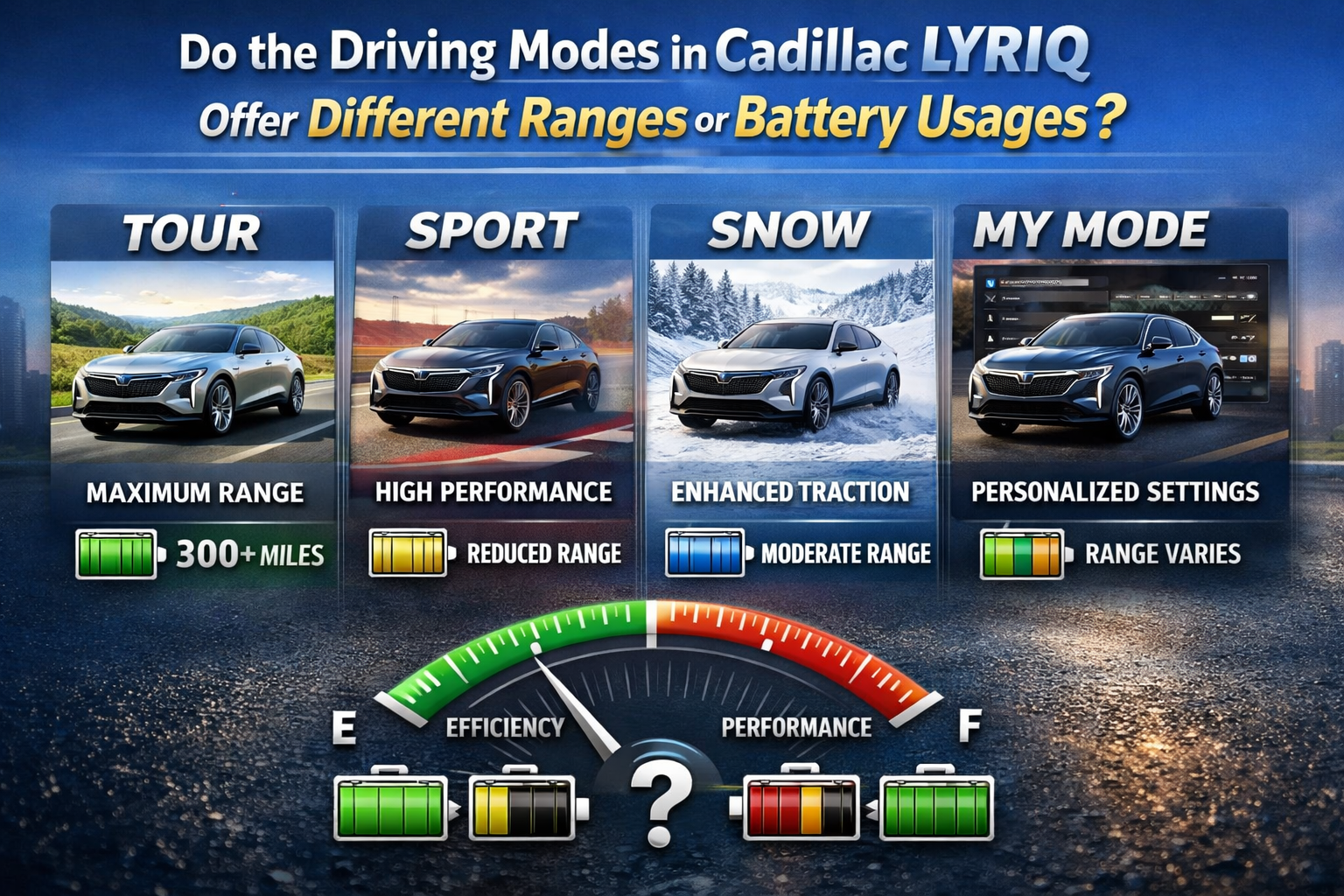
The is a premium electric SUV built on GM’s Ultium battery platform, offering an EPA-estimated range of over 300 miles depending on configuration. As EV adoption grows, drivers increasingly want to understand how different driving modes impact real-world battery usage and total driving range.
One of the most common questions online is:
Do the Driving Modes in Cadillac Lyriq Change the Range?
Short Answer (Featured Snippet Optimized):
Yes, driving modes in the Cadillac Lyriq can affect real-world range by altering throttle response, power delivery, and energy consumption patterns. However, they do not change the battery’s actual capacity. The difference in range depends primarily on driving behavior within each mode.
Now let’s examine this in detail.
Understanding Cadillac Lyriq Driving Modes
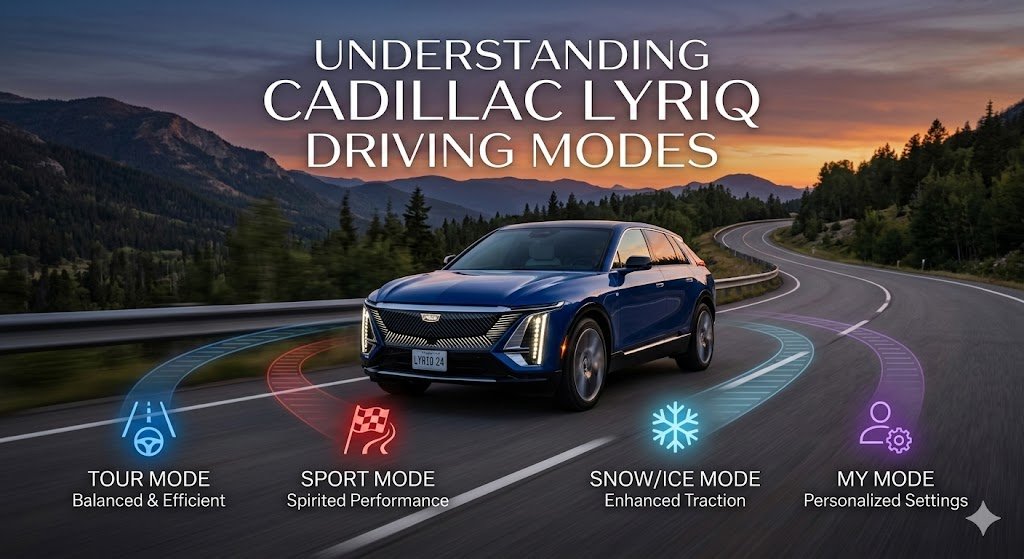
The Lyriq includes multiple drive modes engineered to adjust vehicle dynamics, performance feel, and traction behavior. While features may vary slightly depending on trim and software updates, the primary modes include:
- Tour Mode
- Sport Mode
- Snow/Ice Mode
- My Mode (Customizable)
Each mode recalibrates:
- Throttle sensitivity
- Steering response
- Stability control thresholds
- Power distribution
- Regenerative braking intensity
These factors influence energy efficiency (measured in miles per kWh) — which directly determines how far the vehicle can travel on a single charge.
Battery Capacity vs. Battery Usage: Important Distinction
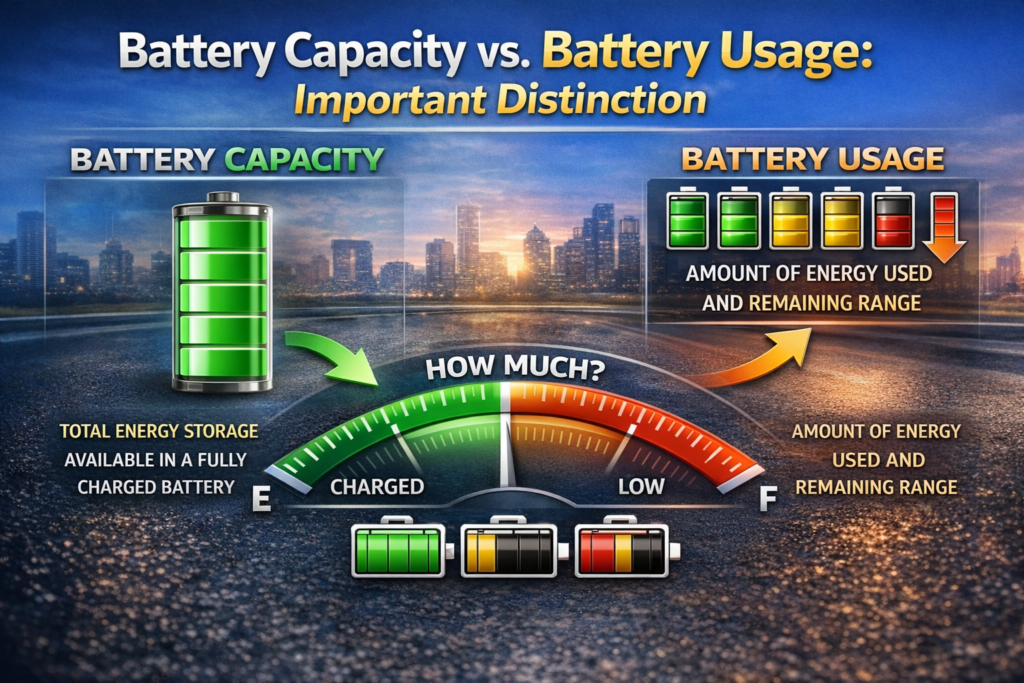
Before comparing modes, it’s essential to understand:
Driving modes do NOT:
- Increase battery size
- Unlock hidden battery reserves
- Limit total usable battery percentage
- Affect long-term battery health
The Cadillac Lyriq’s battery capacity remains constant regardless of the selected mode.
What changes is how quickly the vehicle draws power from the battery.
Think of it like using the same fuel tank but changing how aggressively you press the accelerator.
Driving Modes Comparison Table
Below is a professional breakdown of how each mode affects performance and efficiency:
| Driving Mode | Throttle Mapping | Energy Usage Pattern | Best For | Real-World Range Impact |
|---|---|---|---|---|
| Tour Mode | Smooth & progressive | Controlled power draw | Daily commuting, long highway drives | Highest efficiency |
| Sport Mode | Sharp & aggressive | Higher peak energy demand | Dynamic driving | 5–15% lower depending on habits |
| Snow/Ice Mode | Soft & restricted | Limited torque output | Slippery conditions | Similar to Tour, weather-dependent |
| My Mode | Customizable | Driver-defined | Balanced personalization | Varies by setup |
This table shows clearly that range differences are linked to energy consumption behavior — not battery capacity changes.
Tour Mode: Designed for Maximum Efficiency
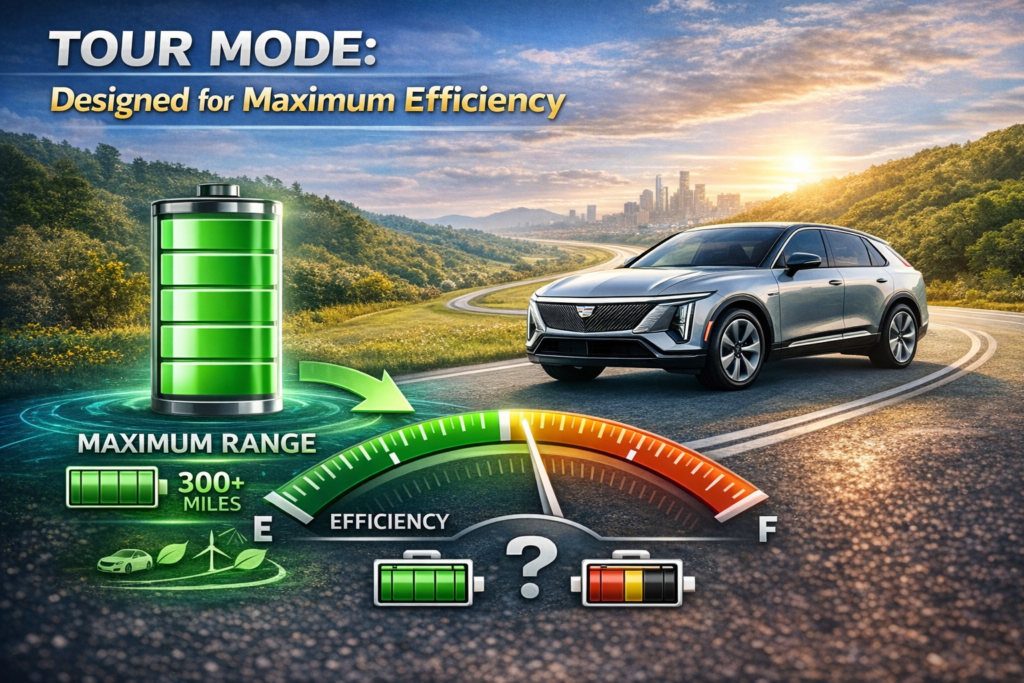
Tour Mode prioritizes smooth acceleration and balanced steering.
Why it improves efficiency:
- Reduces sudden torque spikes
- Encourages steady cruising
- Minimizes unnecessary power surges
- Optimizes regenerative braking feel
Drivers aiming to achieve EPA-estimated range figures should primarily use Tour Mode.
For long-distance road trips, this is typically the most efficient setting.
Sport Mode: Performance-Oriented Energy Use
Sport Mode enhances responsiveness and increases throttle sensitivity.
Technical impact on battery usage:
- Faster acceleration requires higher kilowatt output
- More aggressive torque delivery increases energy draw
- Higher average speeds increase aerodynamic drag
In practical terms, Sport Mode can reduce total driving range by approximately 5–15%, especially under spirited driving conditions.
However, conservative driving in Sport Mode may produce similar efficiency to aggressive driving in Tour Mode.
The driver ultimately determines energy consumption more than the mode itself.
Snow/Ice Mode: Stability Over Speed
Snow/Ice Mode is engineered to prevent wheel slip and improve traction in low-grip environments.
Energy characteristics:
- Restricted torque output
- Gradual acceleration curve
- Increased traction system intervention
While smoother acceleration may theoretically improve efficiency, winter conditions significantly impact EV range due to:
- Reduced battery chemical efficiency in cold temperatures
- Increased energy usage for cabin heating
- Higher air density increasing aerodynamic resistance
As a result, temperature plays a larger role in winter range reduction than Snow Mode itself.
Regenerative Braking and One-Pedal Driving
The Cadillac Lyriq includes advanced regenerative braking functionality.
When slowing down, kinetic energy is converted back into electrical energy and stored in the battery.
Benefits include:
- Improved city-driving efficiency
- Increased overall miles per charge
- Reduced mechanical brake wear
Effective use of regenerative braking often impacts range more than switching between Tour and Sport modes.
Drivers who master smooth deceleration and one-pedal driving typically see measurable efficiency improvements.
What Actually Affects Cadillac Lyriq’s Range More Than Drive Modes?
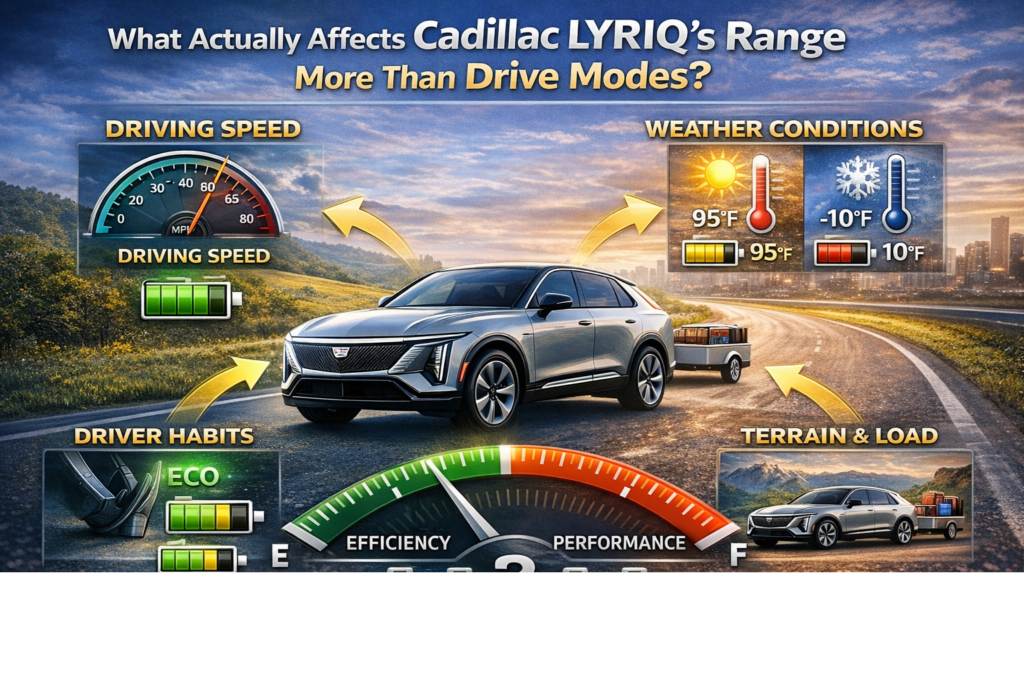
While drive modes influence efficiency, these factors have greater impact:
1. Driving Speed
Aerodynamic drag increases exponentially at higher speeds. Driving above 70 mph significantly reduces EV efficiency.
2. Acceleration Behavior
Rapid acceleration demands high instantaneous power output.
3. Ambient Temperature
Cold weather can reduce EV range by 10–30%.
4. Terrain
Steep inclines require higher power output. Regenerative braking helps offset some losses downhill.
5. Climate Control Usage
Cabin heating consumes more energy than air conditioning in electric vehicles.
Real-World Owner Expectations
Based on real-world EV performance patterns:
- Tour Mode offers the most consistent efficiency
- Sport Mode trades some efficiency for responsiveness
- Snow Mode impact depends more on weather than settings
Most drivers will not see dramatic differences unless they frequently accelerate aggressively.
The key insight:
Driving style matters more than driving mode.
Final Verdict: Do Driving Modes Change Range in Cadillac Lyriq?
Yes: indirectly.
Driving modes in the Cadillac Lyriq influence how efficiently battery energy is used by adjusting throttle response and power delivery. However, they do not alter battery capacity.
If maximizing range is your goal:
- Use Tour Mode
- Maintain steady speeds
- Avoid aggressive acceleration
- Utilize regenerative braking effectively
If performance feel is your priority:
- Sport Mode delivers enhanced responsiveness
- Expect moderate range reduction under dynamic driving
Overall, the Cadillac Lyriq is engineered to maintain strong efficiency across all drive modes, ensuring flexibility without severe range compromises.
Frequently Asked Questions (FAQ)
Does Sport Mode drain the Cadillac Lyriq battery faster?
Yes, Sport Mode can increase energy consumption due to sharper throttle response and higher power output.
Does Tour Mode increase EPA range?
Tour Mode does not increase official EPA range but helps drivers achieve optimal real-world efficiency.
Does Snow Mode save battery?
Snow Mode limits torque for traction but weather conditions play a larger role in winter range reduction.
Can My Mode improve efficiency?
Yes, if configured with softer throttle response similar to Tour Mode.
Do driving modes affect battery health?
No, driving modes do not negatively impact long-term battery health when used normally.



Post Comment