https:// www.microsoft.com /ink in Windows & Office — Full Guide
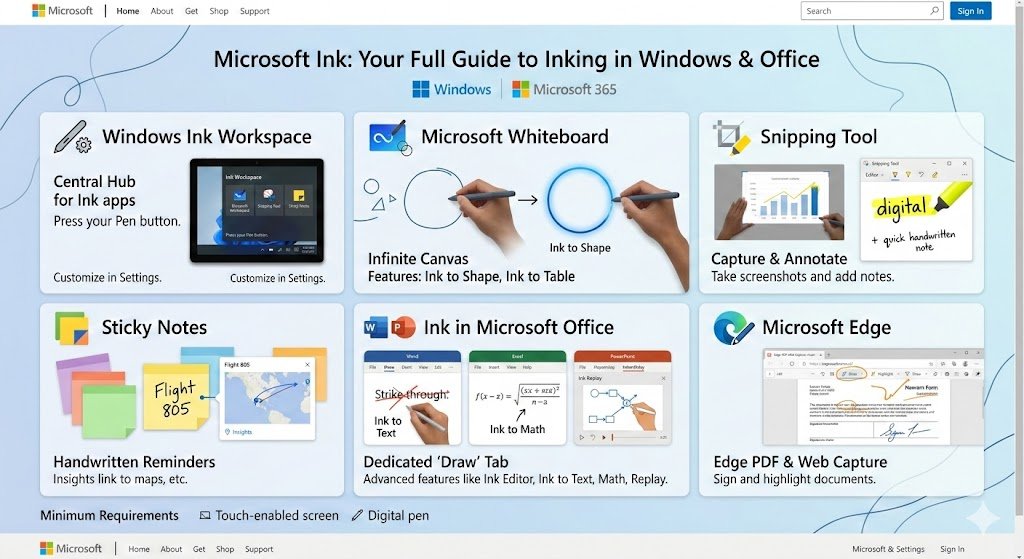
In the digital age, handwriting isn’t obsolete it’s evolved. Microsoft’s digital ink technology, accessible via https:// www.microsoft.com /ink, brings the natural feel of writing and drawing into modern computing. Whether you’re using a stylus, pen, or touchscreen device, Microsoft Ink blurs the lines between analog creativity and digital productivity across Windows and Office apps.
This guide explores how Microsoft Ink works, what you can do with it in Windows and Microsoft Office, and why it’s a powerful tool for creativity, productivity, and collaboration.
What Is Microsoft Ink?
Microsoft Ink isn’t just a single feature or app it’s a suite of inking tools and experiences that allow users to write, draw, annotate, and interact naturally with their Windows devices. It transforms digital handwriting into typed text, converts sketches into shapes, and supports intuitive gestures to edit content.
Digital ink is designed to feel like real pen and paper, enhanced by technology: smooth strokes, pressure sensitivity, tilt recognition, and low input latency make writing on screens feel natural.
Why Microsoft Ink Matters
In a world dominated by keyboards and touchpads, Microsoft Ink gives you:
1. Natural Interaction
Writing by hand offers emotional and cognitive benefits it’s familiar, quick, and expressive. Microsoft Ink preserves these benefits in digital form, so you can think and create as you would with a real pen.
2. Enhanced Productivity
Instead of typing out long notes or explanations, you can capture ideas instantly with your pen or touchscreen then convert handwriting to text or shapes for clean, editable documents.
3. Better Communication
Annotated slides, marked-up spreadsheets, or visually explained concepts help teams understand information faster and more clearly especially in hybrid or creative workflows.
Using Microsoft Ink in Windows
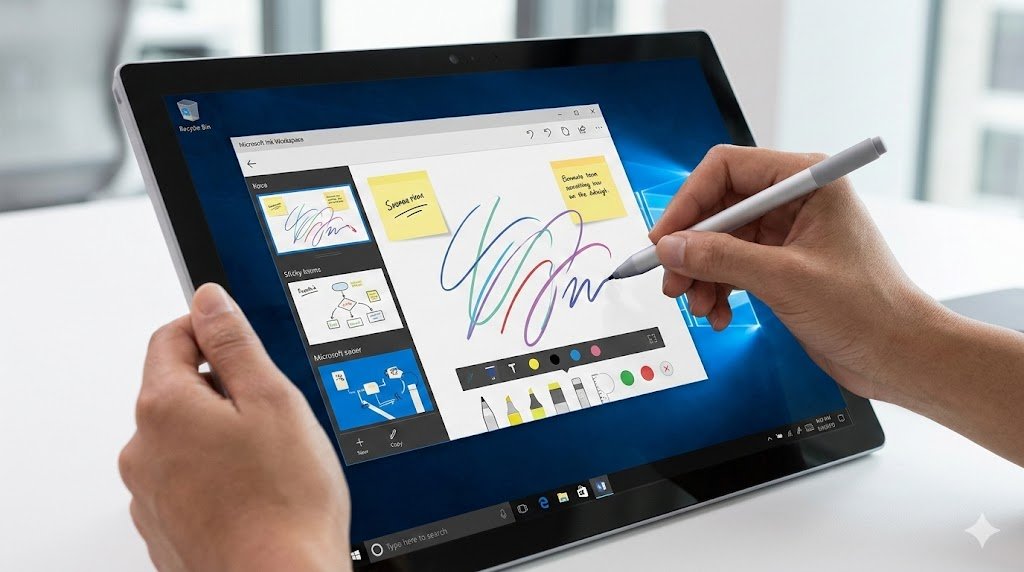
Before diving into Office, it helps to understand how Ink works at the system level in Windows itself.
Windows Ink Workspace
The Windows Ink Workspace is a control center that gives quick access to core inking tools. You can open it from the taskbar icon or by pressing a button on a compatible pen.
From here, you can launch:
- Microsoft Whiteboard – a collaborative infinite canvas for notes and diagrams
- Sticky Notes – quick handwritten reminders turned into digital stickies
- Screen Sketch / Snip & Sketch – capture a screen area and annotate instantly
- Recent pen-enabled apps – fast access to apps that support ink features
Pen Support in Windows
Windows supports most digital pens including the Surface Pen providing:
- Pressure sensitivity
- Tilt recognition
- Palm rejection (so rest your hand naturally while writing)
Even without a keyboard, your pen can navigate, click, edit, and select items throughout Windows.
Microsoft Ink in Office Apps

One of the strongest integrations of Microsoft Ink is inside the Microsoft Office suite (Word, PowerPoint, Excel, OneNote). These ink features help you write, annotate, convert, and edit content directly.
1. Word: Writing and Markup with Ink
In Word, the Draw tab lets you handwrite comments, mark up drafts, and annotate documents. You can:
- Write naturally with pressure and tilt
- Highlight text
- Convert handwritten notes into editable text
- Use the Ink Editor to edit text with gestures (like circling to select or crossing to delete)
Tip: If the Draw tab doesn’t appear automatically, you can enable it from File → Options → Customize Ribbon.
Word also supports Ink to Math, where handwritten equations can become formatted, typed math ideal for students and professionals alike.
2. PowerPoint: Visual Storytelling and Annotations
In PowerPoint, Ink shines during presentations and slide design:
- Draw or highlight live on slides
- Visualize concepts with sketches
- Annotate key points for emphasis during talks
- Convert sketches into cleaner shapes if needed
PowerPoint also offers Ink Replay, which lets you playback ink strokes useful for demonstrating processes or ideas step by step.
3. Excel: Visual Explanations and Ink to Text
Excel supports:
- Marking up data visually
- Handwritten explanations directly on sheets
- (In newer Excel versions) Ink to Text Pen, which converts handwriting into typed content inside cells a massive productivity boost for tablet users.
This makes collaboration easier — colleagues see both the data and your visual context right beside it.
4. OneNote: The Ultimate Ink Playground
OneNote is Microsoft’s note-taking hub. Here, Ink is often deeper:
- Handwrite notes with true pressure and tilt
- Use Lasso Select to circle content for editing
- Convert handwritten notes to text
- Use shape recognition for visual clarity
- Include math, diagrams, sketches, and more
Many users call OneNote the best app for digital ink because of its flexibility and responsiveness.
Transforming Ink into Text and Shapes
One of Ink’s most powerful features is the ability to convert handwriting into typed text and sketches into clean shapes. This reduces manual retyping and gives structure to creative ideas.
Common conversions include:
- Handwriting → Editable text
- Rough sketches → Geometric shapes
- Math equations → Formatted expressions
Gestures and Natural Editing
Microsoft Ink goes beyond simple strokes. You can use natural gestures to edit documents:
- Scratch out to delete text
- Circle to select content
- Draw arrows to rearrange or indicate flow
- “Cross” to insert breaks or space
These gestures let you interact with content in intuitive ways no menus or toolbars needed.
Customization and Pen Settings
Windows and Office both let you tweak how your pen works:
- Choose what clicking or double-tapping does
- Set default pen actions (e.g., take notes vs. launch Ink Workspace)
- Change thickness, color, and pen effects
This makes Ink flexible for different users whether you’re an artist, student, or business professional.
Collaboration and Shared Creativity
Microsoft Ink isn’t just about individual use it powers collaborative tools like Microsoft Whiteboard. Whiteboard is an infinite canvas where teams can:
- Sketch ideas together in real time
- Brainstorm visually
- Add notes and images
- Share boards across devices and teams
This is particularly useful in hybrid work environments whiteboarding sessions can happen even if participants aren’t in the same room.
Tips for Best Results with Microsoft Ink
To get the most from Microsoft Ink:
- Use a Quality Stylus
Devices like the Surface Pen offer pressure sensitivity and tilt support that feel natural. - Enable Relevant Features
In Office apps, enable the Draw tab and experiment with tools like Ink to Text and Ink Editor. - Learn Gestures
Natural gestures (circle, scratch, highlight) speed up editing and reduce reliance on menus. - Customize Your Pen Menu
Pin your favorite inking apps for quick access. - Update Windows and Office
New features like the Ink to Text pen in Excel and enhanced brushes are rolled out through updates keep software current.
In Conclusion
Microsoft Ink accessible via https:// www.microsoft.com /ink reimagines how we interact with our devices. It blends the freedom and familiarity of handwriting with digital power and precision. From casual notes and creative sketches to formal documents and collaborative sessions, Ink empowers users to work in ways that feel natural and productive.
By integrating deeply with Windows and Office, Microsoft Ink isn’t just a novelty it’s a practical tool for the modern digital workspace. Whether you’re a student, artist, professional, or creative thinker, Ink adds a powerful dimension to your workflow.
Read More: Do the Driving Modes in Cadillac Lyriq Offer Different Ranges or Battery Usages?




Post Comment