Jyokyo Japanese Meaning: Situation and Cultural Insight
Introduction
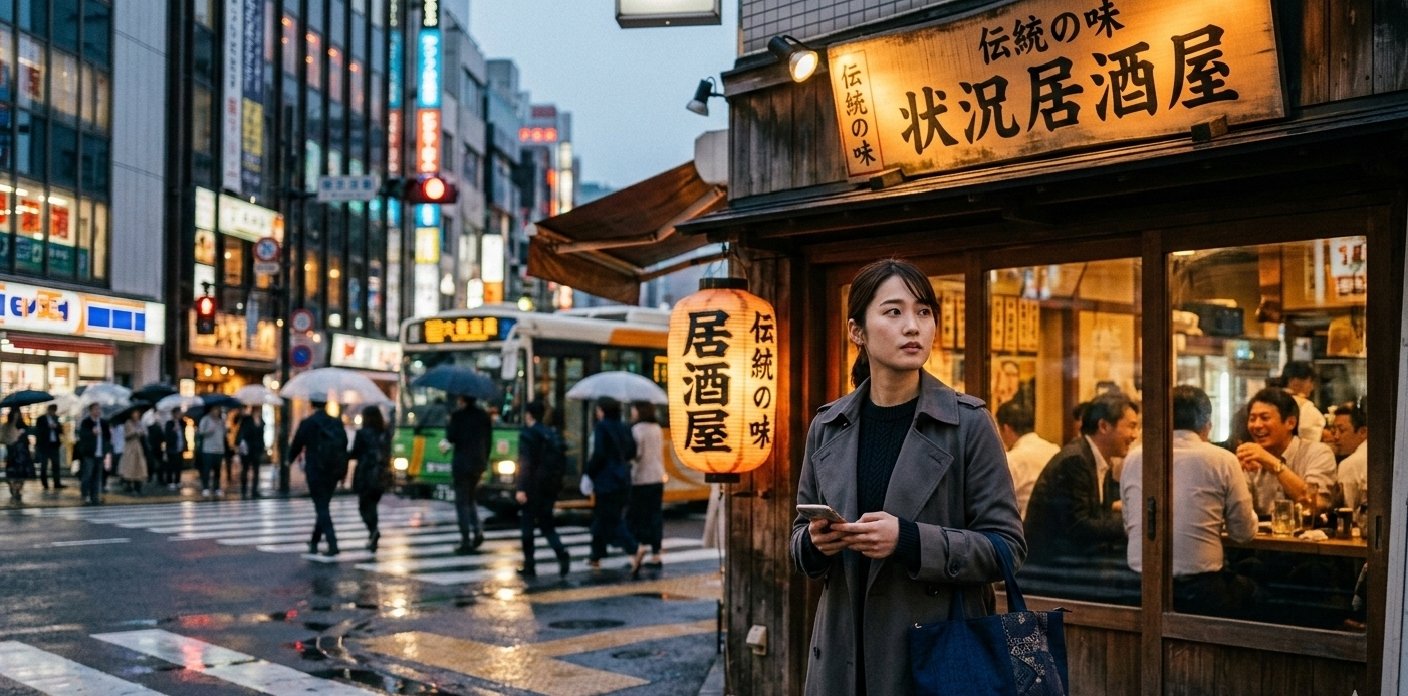
The word jyokyo is commonly translated into English as “situation,” “circumstances,” or “state of affairs.” At first glance, it seems like a simple and direct term. However, in Japanese society, the idea behind jyokyo carries deep cultural meaning. It reflects how people adjust their behavior, speech, and decisions according to context.
Understanding this concept provides insight not only into language, but also into Japanese communication style, social expectations, and cultural values. In Japan, context is often more important than personal opinion. What is appropriate depends heavily on the situation at hand.
The Core Meaning of Jyokyo
In English, when we use the word “situation,” we usually mean the current set of circumstances surrounding an event. For example:
- “What’s the situation?”
- “It depends on the circumstances.”
- “Given the current state of affairs…”
Similarly, jyokyo refers to the overall environment, conditions, and background factors present at a particular moment.
However, in Japan, this idea goes beyond external facts. It includes:
- Social relationships
- Hierarchy
- Emotional atmosphere
- Timing
- Physical environment
In other words, jyokyo is not just what is happening it is the full context in which something is happening.
Context Shapes Behavior
Japan is often described as a high-context culture. This means that communication relies heavily on shared understanding, nonverbal cues, and situational awareness rather than explicit statements.
In many Western cultures, people value directness. In Japan, people often adapt to the jyokyo instead of speaking bluntly.
For example:
- A junior employee may avoid openly disagreeing with a senior colleague.
- A person might stay silent during a meeting if the timing feels inappropriate.
- Someone may soften their opinion to maintain harmony.
Rather than rejecting an idea directly, a person might imply that “this is not the right situation for that.” The focus shifts from personal disagreement to contextual appropriateness.
Jyokyo in the Workplace
In professional environments, situational awareness is highly valued. Employees are often expected to understand expectations without being told directly.
For instance:
- If a client appears dissatisfied, action is expected even without a complaint.
- If a manager looks stressed or busy, interrupting may be considered insensitive.
- If a group decision is leaning one way, open resistance might be expressed more subtly.
Success in Japanese business culture often depends on the ability to sense what the situation requires. It is not only about skill or knowledge, but also about timing and sensitivity.
This is why observing first and speaking later is common practice. People gather information from the atmosphere before deciding how to act.
Social Harmony and Group Awareness
One of the strongest cultural values in Japan is harmony within the group. Maintaining balance and avoiding unnecessary conflict are considered important.
Because of this, behavior changes depending on the jyokyo. For example:
- Language becomes more polite in formal settings.
- Tone becomes softer when discussing sensitive topics.
- Opinions may be expressed indirectly to avoid embarrassment.
Children are often taught from a young age to be aware of their surroundings and to consider how their actions affect others. Acting without awareness of the situation may be seen as immature or inconsiderate.
In group environments such as schools, offices, or social gatherings, individuals constantly adjust themselves according to what the situation calls for.
Everyday Use of the Concept
The idea of jyokyo appears in everyday life, not only in formal contexts.
Friends might ask about someone’s situation during a difficult time. News reports frequently describe the current situation surrounding political events, accidents, or natural disasters. Businesses provide updates about the present situation when explaining delays or changes.
Because it is neutral and flexible, the word can apply to both ordinary and serious circumstances. It can describe something as simple as a busy afternoon or as serious as a national crisis.
Comparison With Similar English Ideas
Although “situation” is the closest translation, it does not always capture the full meaning. In English, people often separate facts from feelings. In Japanese culture, these elements are more intertwined.
For example:
- “Condition” usually refers to measurable states.
- “Case” refers to specific examples.
- “Circumstances” may describe background factors.
But jyokyo combines environment, relationships, emotional tone, and timing into one broader concept.
It is holistic rather than analytical.
Psychological and Philosophical Dimensions
The emphasis on situation over individual assertion connects to deeper philosophical traditions in Japan.
Historically, social and religious influences have emphasized:
- Interconnectedness
- Social roles
- Adaptability
- Impermanence
Rather than seeing people as isolated decision-makers, Japanese thought often frames individuals as existing within networks of relationships and changing conditions.
As a result, decision-making is rarely based solely on personal preference. Instead, it considers what is appropriate within the current situation.
This perspective encourages flexibility. What is correct in one context may not be correct in another.
Why This Concept Matters for Language Learners
For learners of Japanese culture and communication, understanding vocabulary is not enough. True fluency requires awareness of context.
Someone might speak grammatically correct sentences yet still sound unnatural if they ignore situational expectations.
For example:
- Expressing disagreement too directly can feel abrupt.
- Asking personal questions at the wrong time may feel intrusive.
- Speaking casually in formal settings may appear disrespectful.
Recognizing the situation helps avoid misunderstandings.
It also explains why silence can be meaningful. In some cases, saying nothing shows awareness and respect for the moment.
Modern Relevance
Even in contemporary Japan, where globalization influences communication styles, sensitivity to the situation remains important.
In social media interactions, workplaces, schools, and families, people continue to evaluate:
- Who is present
- What mood dominates the room
- What outcome is desired
- What timing is appropriate
The concept adapts to modern life while retaining its cultural foundation.
Conclusion
The meaning of jyokyo extends far beyond the simple English word “situation.” It represents a worldview in which context shapes communication, behavior, and decision-making.
In Japanese society, understanding the situation means recognizing relationships, hierarchy, atmosphere, and timing. It requires observation, empathy, and adaptability.
By appreciating this concept, we gain deeper insight into how Japanese culture prioritizes harmony and contextual awareness. We also learn an important universal lesson: words do not exist in isolation. They live within situations.
To truly understand Japanese communication, one must look not only at what is said, but also at the surrounding circumstances that give those words meaning.



Post Comment