Newtopy Explained: Everything You Need to Know
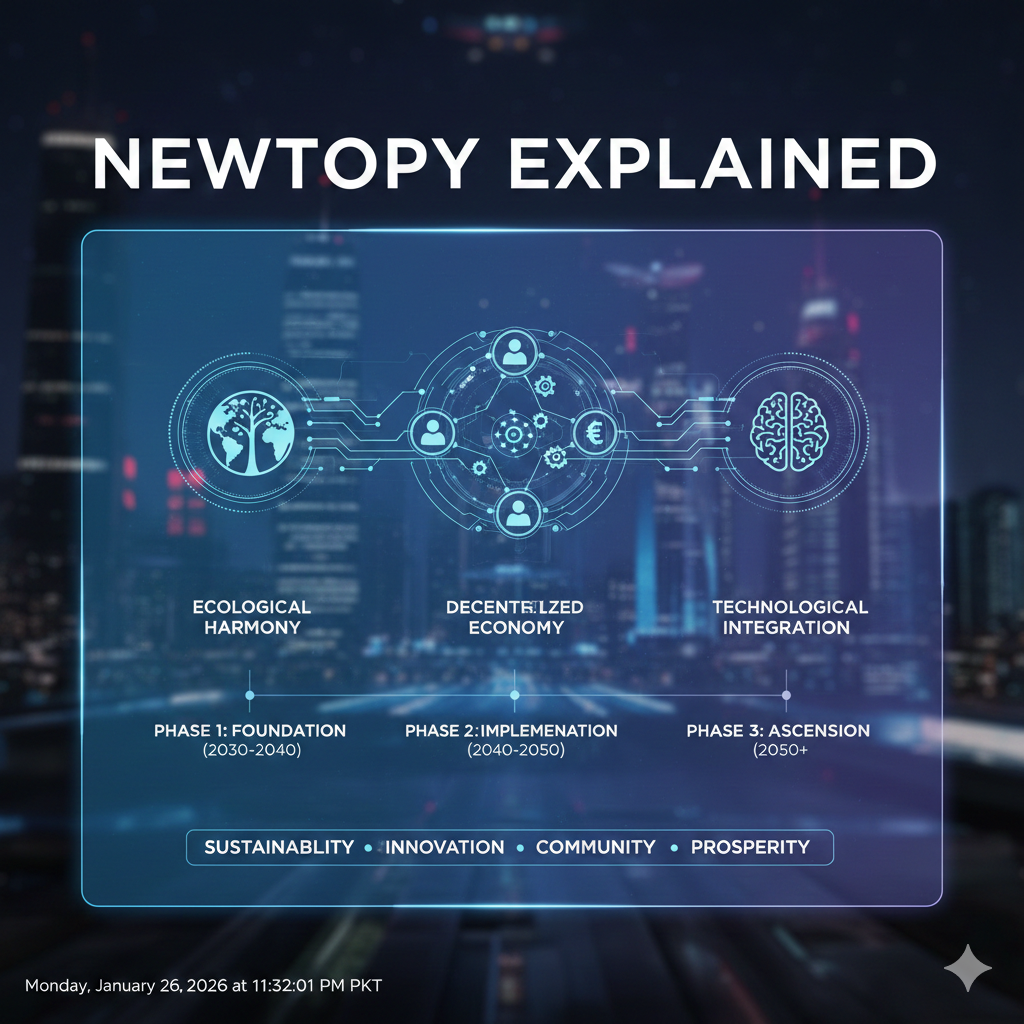
In a digital world that evolves faster than ever, new ideas, terms, and frameworks constantly emerge to help people make sense of change. One such concept gaining attention is Newtopy. While still relatively new, Newtopy represents a powerful way of thinking about innovation, growth, and adaptability in the modern era.
This article breaks down what Newtopy is, why it matters, how it works, and how you can apply it in real life or business. Whether you’re a creator, entrepreneur, student, or simply curious, this guide will give you a complete understanding of Newtopy from the ground up.
What Is Newtopy?
At its core, Newtopy is a mindset and strategic approach centered on continuous innovation, adaptive thinking, and forward-focused problem solving. The term blends the idea of “new” with a structured system or environment suggesting a space where fresh ideas are not only welcomed but actively cultivated.
Newtopy isn’t tied to one industry. Instead, it applies across technology, education, marketing, personal development, and creative fields. It emphasizes flexibility over rigidity, learning over stagnation, and progress over perfection.
In simple terms, Newtopy is about building systems, habits, and strategies that evolve as the world changes.
Why Newtopy Matters in Today’s World
The traditional ways of working, learning, and growing no longer guarantee success. Industries shift overnight. Skills become outdated. Algorithms change. Markets fluctuate.
This is where Newtopy becomes relevant.
1. Change Is No Longer Optional
The pace of change has accelerated dramatically. Those who cling to outdated models often struggle, while those who embrace adaptability thrive. Newtopy encourages a proactive response to change instead of a reactive one.
2. Information Overload Requires Better Thinking
We live in an age of endless information. Newtopy helps filter noise by focusing on what’s useful, actionable, and forward-looking, rather than chasing every trend blindly.
3. Innovation Is a Survival Skill
Innovation is no longer limited to startups or tech companies. Individuals now need innovative thinking just to stay relevant in their careers. Newtopy turns innovation into a daily practice rather than a rare breakthrough.
The Core Principles of Newtopy
Newtopy is built on a few key principles that guide how it’s applied.
1. Continuous Learning
Newtopy assumes that learning never stops. Skills, tools, and perspectives must constantly evolve. This doesn’t mean chasing everything new it means learning with intention.
People who adopt Newtopy regularly:
- Update their skills
- Question old assumptions
- Stay curious instead of defensive
2. Adaptive Systems
Rather than rigid plans, Newtopy favors flexible systems that can adjust when conditions change. This applies to businesses, workflows, content strategies, and even personal routines.
Instead of asking, “Is this perfect?” Newtopy asks:
“Can this adapt when things change?”
3. Experimentation Over Fear
Newtopy embraces experimentation. Failure is treated as feedback, not defeat. Small tests, quick iterations, and real-world validation are encouraged over endless planning.
4. Human-Centered Progress
Despite being forward-focused, Newtopy keeps humans at the center. It values clarity, creativity, and well-being not burnout or blind automation.
How Newtopy Works in Practice
Newtopy isn’t just a theory. It’s highly practical when applied correctly.
In Business
Businesses using Newtopy:
- Continuously test products and messaging
- Listen closely to customer feedback
- Adapt business models based on data and trends
Instead of committing to long-term rigid strategies, they build responsive frameworks that evolve.
In Content Creation
For creators, Newtopy means:
- Experimenting with formats and platforms
- Learning from analytics without obsessing
- Evolving your voice as your audience grows
Creators using Newtopy don’t panic when trends shift they adapt.
In Personal Growth
On a personal level, Newtopy encourages:
- Lifelong skill development
- Mental flexibility
- Self-reflection and iteration
Your goals can change, and that’s okay. Newtopy supports growth that aligns with who you’re becoming, not who you were.
Newtopy vs Traditional Approaches
To better understand Newtopy, it helps to compare it with traditional thinking.
| Traditional Thinking | Newtopy Thinking |
|---|---|
| Fixed plans | Adaptive systems |
| Fear of failure | Learning through testing |
| One-time learning | Continuous learning |
| Rigid roles | Evolving skills |
| Linear progress | Iterative growth |
Newtopy doesn’t reject structure it redefines it to be flexible and resilient.
Benefits of Embracing Newtopy
Adopting Newtopy offers several long-term advantages.
1. Greater Resilience
When setbacks occur, Newtopy thinkers recover faster because they expect change and uncertainty.
2. Faster Growth
Small experiments and constant learning lead to quicker improvement compared to waiting for perfect conditions.
3. Future-Proof Skills
By focusing on adaptability, you build skills that remain useful even as tools and platforms change.
4. Reduced Anxiety About Change
When change becomes normal, it stops being scary. Newtopy turns uncertainty into opportunity.
Common Misconceptions About Newtopy
Despite its benefits, Newtopy is often misunderstood.
“Newtopy Means Chasing Every Trend”
Not true. Newtopy values strategic adoption, not trend hopping. It’s about relevance, not novelty for its own sake.
“Newtopy Has No Structure”
Newtopy still uses structure — just flexible structure. Think systems, frameworks, and feedback loops instead of rigid rules.
“Newtopy Is Only for Tech People”
Newtopy applies to anyone. Teachers, artists, freelancers, students, and entrepreneurs can all benefit from its principles.
How to Start Applying Newtopy Today
You don’t need a major overhaul to begin. Small steps matter.
Step 1: Review One Area of Your Life or Work
Pick one area career, content, business, or learning and ask:
- What feels outdated?
- What could be more flexible?
Step 2: Run Small Experiments
Try something new on a small scale. Measure results. Learn. Adjust.
Step 3: Build a Learning Habit
Dedicate time weekly to learning — reading, courses, observation, or reflection.
Step 4: Create Feedback Loops
Listen to data, people, and outcomes. Let feedback guide your next move.
The Future of Newtopy
As technology advances and industries continue to shift, Newtopy is likely to become more relevant, not less. The future favors those who can learn fast, adapt wisely, and think creatively.
Newtopy isn’t about predicting the future it’s about being prepared for whatever comes next.
Final Thoughts
Newtopy is more than a buzzword. It’s a practical philosophy for navigating modern complexity. By embracing adaptability, continuous learning, and human-centered innovation, Newtopy offers a way to grow without fear of change.
In a world where nothing stays the same for long, Newtopy helps you stay grounded, relevant, and ready.



Post Comment