United Flight UA109 Diversion Explained
Introduction
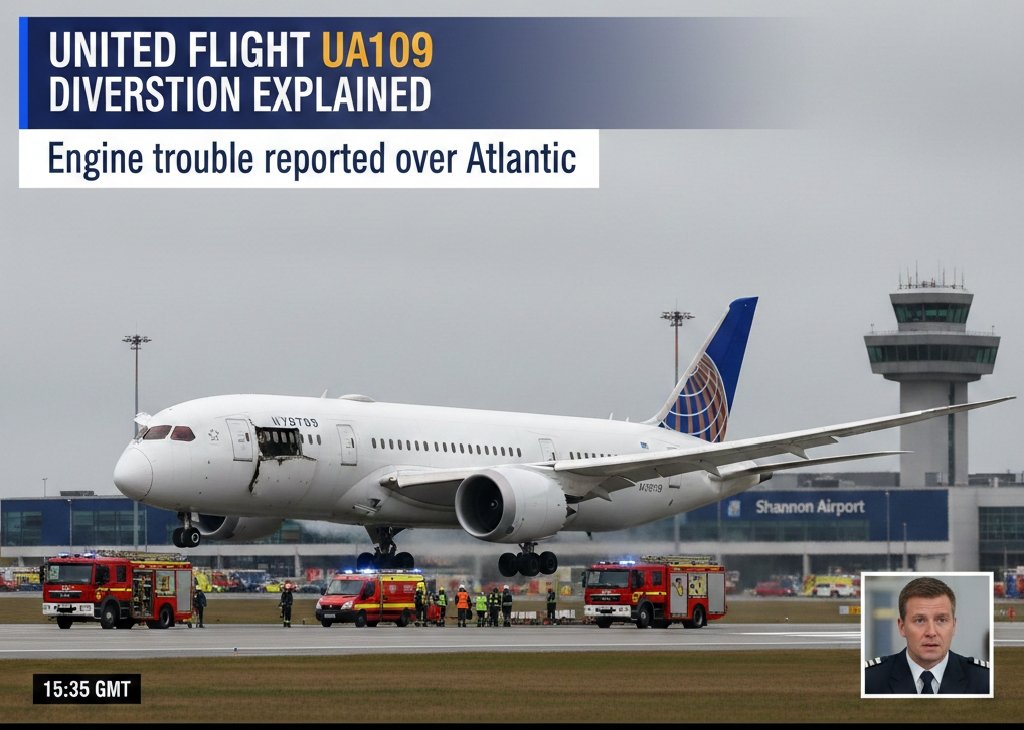
Flight diversions are among the most closely watched events in commercial aviation. When passengers board an international flight, they expect a smooth journey from departure to arrival. However, operational realities sometimes require pilots to change course midair. One such case involved United Flight UA109, operated by United Airlines. The diversion of UA109 sparked widespread interest among travelers, aviation observers, and media outlets eager to understand what happened and why.
In this article, we’ll break down what a diversion means, the most common causes behind such decisions, how airlines handle them, and what passengers can expect when a flight like UA109 is rerouted.
What Is a Flight Diversion?
A flight diversion occurs when an aircraft lands at an airport other than its originally scheduled destination. Diversions are not rare, nor are they automatically a sign of danger. In fact, they are often precautionary measures designed to prioritize safety above all else.
Airlines operate under strict safety regulations governed by aviation authorities such as the Federal Aviation Administration (FAA) in the United States. Pilots are trained to make conservative decisions. If there is any concern involving passenger health, weather conditions, mechanical indicators, or operational constraints, a diversion may be the safest course of action.
Overview of United Flight UA109
United Flight UA109 is a long-haul international route typically operated by wide-body aircraft designed for extended travel. Long-haul flights involve complex logistics, including fuel calculations, weather monitoring, crew duty limits, and coordination with international air traffic control authorities.
When UA109 diverted, it triggered attention partly because international diversions can significantly impact passengers’ schedules, connecting flights, and airport operations. While diversions can feel disruptive, they are ultimately a reflection of aviation’s safety-first philosophy.
Common Reasons for Flight Diversions
Although each case has unique details, most diversions fall into a few primary categories:
1. Medical Emergencies
One of the most frequent reasons for diversions is a passenger or crew medical emergency. On long-haul flights especially, the likelihood of health-related incidents increases due to the duration of travel.
If a passenger experiences severe chest pain, breathing difficulty, loss of consciousness, or another serious condition, pilots may choose to land at the nearest suitable airport. Time is critical in medical cases, and immediate access to emergency services can be life-saving.
2. Mechanical or Technical Issues
Modern aircraft are equipped with advanced monitoring systems that constantly track performance. Even a minor anomaly—such as an unusual sensor reading—can prompt further evaluation.
Pilots follow strict checklists. If a system indicates something outside normal parameters, the crew may divert to ensure the aircraft can be inspected. In many cases, these turn out to be precautionary rather than dangerous situations.
3. Weather Conditions
Weather remains one of aviation’s most unpredictable factors. Severe thunderstorms, high crosswinds, snowstorms, or low visibility at the destination airport can make landing unsafe.
Rather than attempt a risky approach, pilots may choose an alternate airport where weather conditions are more favorable.
4. Security Concerns
Although rare, security-related issues can lead to diversions. Any credible onboard threat must be treated with utmost seriousness, following international aviation security protocols.
5. Operational Constraints
Crew duty time limitations, airport congestion, or unexpected runway closures can also force rerouting decisions. These situations are logistical rather than emergency-driven but still require immediate action.
How Diversion Decisions Are Made
The decision to divert is never taken lightly. It involves coordination among:
- The flight captain and first officer
- Airline dispatch teams
- Air traffic control
- Sometimes medical advisory services
The captain has ultimate authority onboard. If they determine that landing at an alternate airport is necessary for safety, that decision is final.
Airlines like United Airlines maintain operational control centers that monitor flights in real time. These centers assist pilots in identifying suitable alternate airports based on runway length, weather conditions, maintenance facilities, and passenger handling capabilities.
What Happens After a Diversion?
When a flight such as UA109 diverts, several processes immediately begin:
1. Safe Landing and Assessment
Once on the ground, local emergency responders may meet the aircraft if needed. Medical personnel, maintenance engineers, or security teams assess the situation.
2. Passenger Communication
Airlines typically inform passengers about the reason for the diversion once confirmed. Transparency varies depending on the nature of the event, but safety-related information is usually prioritized.
3. Rebooking and Logistics
Diversions often cause missed connections. Airlines work to:
- Rebook passengers on alternative flights
- Provide meal vouchers or hotel accommodations if necessary
- Arrange replacement aircraft if mechanical issues are involved
For international routes, additional coordination may be required due to customs and immigration procedures.
Passenger Experience During a Diversion
For passengers, diversions can be stressful especially during long-haul international travel. However, it’s important to understand that such decisions are made with safety in mind.
During a diversion, passengers can expect:
- Clear announcements from the cockpit
- Cabin crew instructions to remain seated during landing
- Possible delays on the tarmac while ground services are arranged
While inconvenient, diversions are generally handled in an orderly and professional manner.
Safety Record and Industry Context
Commercial aviation remains one of the safest modes of transportation worldwide. Diversions are part of a broader risk-management system that prioritizes prevention over reaction.
Aircraft are designed with redundancy systems—meaning critical components have backups. Pilots undergo simulator training for diversion scenarios, emergency landings, and rare system failures. Airlines also conduct post-incident reviews to refine procedures further.
In many cases, what may seem alarming to passengers is, from an operational standpoint, a standard precaution.
Media and Public Reaction
Whenever a flight diversion occurs, especially on international routes, news coverage and social media discussions often follow quickly. Aviation tracking platforms allow the public to see route changes in real time, increasing visibility.
However, it’s important to differentiate between speculation and confirmed information. Early reports may lack context. Official airline statements or aviation authority summaries provide the most reliable insights.
Lessons From the UA109 Diversion
The diversion of United Flight UA109 underscores several important realities about modern aviation:
- Safety decisions are proactive, not reactive.
- Pilots are empowered to act conservatively.
- Diversions are built into operational planning.
- Passenger well-being remains the top priority.
Rather than signaling failure, a diversion often demonstrates that safety systems are functioning exactly as intended.
Conclusion
The diversion of United Flight UA109 serves as a reminder that air travel, while highly efficient, operates in a dynamic environment. From medical emergencies to weather challenges, numerous variables can affect a flight’s path.
Airlines like United Airlines adhere to strict safety protocols that guide every decision. When a diversion occurs, it reflects a commitment to protecting passengers, crew, and aircraft.
For travelers, the key takeaway is reassurance: diversions are precautionary measures designed to ensure that every journey concludes safely even if it means landing somewhere unexpected.
In aviation, safety is never optional and sometimes, changing course is the safest route of all.




Post Comment